
Make low-carb almond meal cookies with measured ingredients, even portions, balanced texture, safe storage, and practical serving ideas.
Quick answer: Low-carb almond meal cookies are easiest to make when you treat almond meal as a textured flour rather than a direct wheat-flour substitute. Use a measured amount of almond meal, enough egg or another binder to hold the dough, and a modest sweetener that suits your preferences. Bake until the edges are set, cool completely before moving the cookies, and decide the serving size before you start snacking.
Why almond meal works in a low-carb cookie
Almond meal is made from ground almonds, often with the skins included. It has a slightly coarse texture, a naturally nutty flavor, and enough fat to create tenderness in a cookie. It also contributes some protein and dietary fiber, which can make a cookie feel more substantial than a small cookie made from refined flour. The result is still a treat, not a replacement for a varied meal pattern.
Low-carb baking works best when the recipe is designed around the properties of the ingredients. Almond meal does not provide gluten, so it cannot create the same stretchy dough as wheat flour. It can also brown quickly because of the natural fat in the almonds. A cookie may look finished on the outside while the center is still soft, or it may become dry if baked until the edges are very dark. Gentle heat, resting time, and a full cooling period are part of the method.
Before choosing ingredients, decide what “low carb” means for your household. Some people count total carbohydrate, while others estimate digestible carbohydrate by subtracting fiber. Labels and serving sizes vary. If a recipe includes sweeteners, chocolate, dried fruit, or a flavored spread, those additions can change the carbohydrate total more than the almond meal does.
Ingredient roles for a dependable dough
Almond meal
Use fresh almond meal with a pleasant nutty smell. A coarse meal gives the cookies a rustic crumb, while a finer meal produces a smoother bite. If your meal is very coarse, pulse it briefly with the dry ingredients, but avoid turning it into almond butter. The amount matters because too much can make the cookie greasy and fragile.
Binder
Egg is a common binder and also helps the dough set. A flax or chia gel can work in some recipes, but it changes the texture and may add more visible fiber. Add the binder gradually if you are adapting a formula. The dough should hold together when pressed, not pour like batter and not crumble immediately.
Fat
Butter, coconut oil, or another suitable fat can improve tenderness, but almond meal already contains fat. Start with the amount the formula calls for. Adding extra fat because the dough looks dry can produce cookies that spread too much. If the dough needs moisture, a small amount of unsweetened yogurt or another compatible wet ingredient may be more useful, depending on the recipe.
Sweetener and flavor
Choose a sweetener that you tolerate and that behaves well when baked. Some products have a cooling sensation, a stronger aftertaste, or a different effect on browning. Vanilla, cinnamon, citrus zest, cocoa, or a small amount of salt can give the cookies more flavor without relying on a very sweet dough. If you use chocolate chips or chopped fruit, count them as part of the recipe rather than a free garnish.
A simple low-carb almond meal cookie method
First, bring the chilled ingredients to the temperature recommended by the recipe and line a baking sheet with parchment. Mix the almond meal, leavening if used, salt, and spices in one bowl. In a second bowl, stir the softened fat with the sweetener until the mixture is even. Add the egg and flavoring, then combine the wet and dry mixtures without overworking the dough.
Let the dough rest for several minutes. This gives the almond meal time to absorb moisture and makes the final texture easier to judge. If it still will not hold together when pressed, add a very small amount of the recipe’s chosen binder or liquid. If it is shiny and loose, chill it instead of immediately adding more almond meal. Chilling often reduces spreading and makes portioning easier.
Scoop equal portions onto the lined sheet and flatten them slightly if the dough is thick. Consistent portions help the cookies finish at the same time and make nutrition estimates more useful. Leave space between cookies because even a low-carb dough can spread as the fat warms. The cookies should be similar in diameter and thickness.
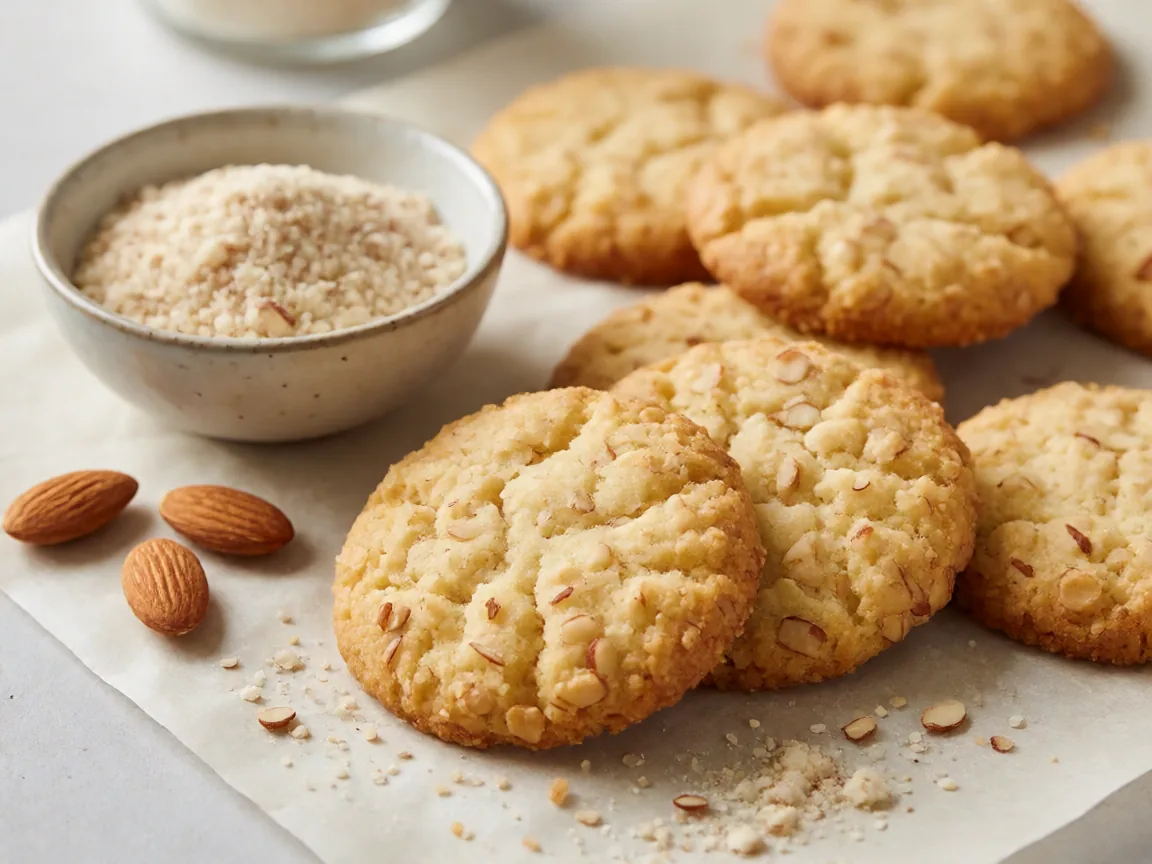
Bake until the edges are set and lightly colored. The center may look soft when the tray comes out, but it should not appear wet. Leave the cookies on the tray for several minutes before moving them to a rack. They become more stable as they cool. If you move them too early, they may break; if you leave them on the hot tray too long, the bottoms can over-brown.
How to keep the texture pleasant
Texture is the main difference between a successful almond meal cookie and one that feels heavy. For a softer cookie, use enough binder and avoid baking until the entire surface is hard. For a crisp cookie, flatten the portions more evenly and allow them to cool fully. A small amount of finely chopped nuts can add crunch, but too many dry ingredients can make the dough crumble.
Do not judge the final texture while the cookie is hot. Almond fat remains fluid at baking temperature, and the structure has not finished setting. Cooling on a rack reduces steam around the bottoms. If you want a chewy result, store the cookies in a sealed container once fully cool. If you want to protect crisp edges, avoid storing them with moist fruit or soft fillings.
For a more fiber-forward option, pair a cookie with a food that brings a different texture rather than adding several tablespoons of extra fiber powder. A small serving of plain yogurt, berries, or a seed-based topping may work for some people. If you are not used to higher-fiber foods, increase gradually and drink fluids according to your personal needs.
Portioning and serving ideas
Decide whether the cookies are a snack, dessert, or part of breakfast. One or two small cookies may be enough with a protein-containing accompaniment, while a larger cookie may stand alone as a planned dessert. The right portion depends on the rest of the day, appetite, and dietary goals. Put the planned amount on a plate instead of eating from the storage container.
For a simple snack, serve a cookie with unsweetened yogurt or a small portion of cheese if those foods fit your eating pattern. For breakfast, use the cookie as a flavor element next to eggs, a vegetable, or another substantial food instead of making cookies the whole meal. For dessert, add cinnamon, citrus zest, or a small spoon of unsweetened cream rather than continually increasing the sweetener.
If you want to turn the cookies into part of a broader meal, browse the fiber-rich meals section for ways to combine a small baked item with a more substantial plate.
You can use the high-fiber snacks section to compare cookies with other snack formats. If you want a more structured baked option, see the high-protein bar recipe guide for a different texture and preparation style.
Substitutions and troubleshooting
If the cookies spread too much
Chill the dough before baking, check whether the fat was too warm, and confirm that the almond meal was measured rather than scooped loosely. A hot baking sheet can also cause early spreading. Bake one test cookie first when adapting a recipe, then adjust the remaining dough.
If the cookies crumble
The dough may need more binder, a little more moisture, or a longer rest. Make sure the cookies are not being moved while hot. If the baked cookies remain fragile when cool, make smaller portions or add a compatible binder next time.
If the cookies taste bitter
Check the freshness of the almond meal and any added sweetener. Nuts can develop stale or rancid flavors when stored warm for a long time. Cocoa, citrus zest, and salt can balance flavor, but they cannot rescue spoiled ingredients.
If the cookies are too dense
Too much almond meal, too little leavening, or overmixing can create a heavy cookie. Use a scale when possible, mix only until combined, and follow the recipe’s rest and bake times. A coarse meal may also produce a denser bite than a fine flour.
Storage and food safety
Cool the cookies completely before storing. Keep them in an airtight container for the period recommended by the recipe, and refrigerate or freeze them if the formula includes perishable fillings or a moist topping. Label the container with the date and separate layers with parchment if the cookies are soft. Thaw frozen cookies in the container so condensation does not collect directly on the surface.
Use clean hands and utensils, especially when adding a topping after baking. Follow current food-safety advice for eggs, dairy, and any ingredients that require refrigeration. If the cookies develop an off smell, visible mold, or an unusual texture, discard them rather than tasting further.
Frequently asked questions
Are almond meal cookies automatically keto?
No. Almond meal may reduce the flour-based carbohydrate load, but the complete recipe and serving size matter. Sugar, dried fruit, chocolate, and large portions can change the total.
Can almond meal replace almond flour?
Sometimes, but the texture will usually be more rustic. A recipe developed for fine almond flour may not set the same way with a coarse meal. Test a small batch when making a substitution.
How can I make the cookies more filling?
Plan the cookie as one part of a snack and pair it with a suitable protein or produce item. Adding more fat or more cookies is not the only way to improve satisfaction.
Can I add fiber powder?
Only if the recipe has been designed for it and you tolerate the ingredient. Large changes can affect texture and digestion. Food-based variety and gradual changes are often easier to manage.
Bottom line
Low-carb almond meal cookies depend on measured ingredients, an appropriate binder, even portions, and patience while they cool. Keep the recipe focused, use a serving that fits the rest of your eating pattern, and treat the cookies as a planned snack or dessert rather than proof that every low-carb food is unlimited. With those boundaries, almond meal can make a practical, textured cookie that is easy to prepare and store.
Reader Comments (8)
This article is fantastic! I could never figure out the difference between peptides and proteins, but now it's crystal clear. The absorption chart is especially helpful — I shared it with my mom and she finally gets why peptides are better absorbed than protein powder.
Thank you so much! Helping people truly understand this is the greatest reward for me. The difference you mentioned — molecular weight and absorption mechanism — is fundamental, and I'll be writing a more detailed comparison article soon 😊
As a gym guy, I always thought whey protein was the gold standard. After reading this, I realize hydrolyzed whey (whey peptides) actually has higher absorption efficiency. Doctor, should I go with whey peptides or regular whey protein powder post-workout?
The pro tip about vitamin C enhancing collagen peptide absorption is gold! I now pair my collagen peptide supplement with kiwi every morning and my skin really does seem to be improving gradually. More practical tips like this, please!