
Make a high protein bar recipe low calorie enough for a planned snack by balancing protein, fiber, moisture, portion size, and storage.
High Protein Bar Recipe Low Calorie: A Practical Homemade Formula
Primary keyword: high protein bar recipe low calorie. This guide focuses on a practical, fiber-aware way to use the topic without making disease-treatment or guaranteed weight-loss claims.
Quick answer
Use the ingredient roles and method below, then adjust the portion to your appetite, schedule, eating pattern, and storage setup. The most useful version is the one that can be prepared safely, eaten with enjoyment, and repeated on an ordinary week.
What this guide is designed to solve
The useful question is not whether how to make a high protein bar recipe low calorie without making the bar dry, fragile, or difficult to portion sounds compatible with a strict label. The useful question is what job the food or plan must do in a real week. A good choice should be clear enough to portion, enjoyable enough to repeat, and flexible enough to survive a late meeting, an unexpected dinner, or a grocery trip that did not go as planned. This guide treats high protein bar recipe low calorie as a practical design problem: define the role, choose ingredients that support that role, and build a fallback before the first busy day arrives. Start with Snack ideas when you need the broader category context.
In a fiber-forward routine, ingredients work in roles rather than as isolated claims. The useful starting set here is plain protein powder or Greek yogurt, eggs, nut or seed butter, chia, ground flax, berries, cocoa, and a small measured dry base. Some ingredients provide protein, some bring bulk or chew, and some carry flavor or moisture. That distinction matters because removing one ingredient changes the balance. A dry base may need a softer companion; a watery vegetable may need draining; and a rich topping may need a visible portion. Role-based thinking makes substitutions calmer and reduces the temptation to chase a perfect recipe label.
Write the occasion in one sentence before preparing anything: this is for how to make a high protein bar recipe low calorie without making the bar dry, fragile, or difficult to portion. If the food is for breakfast, it needs to be easy to reheat or carry. If it is a snack, it needs a stopping point. If it is a planning framework, it needs enough repetition to save effort without making every day identical. The sentence is a small planning tool, but it prevents a common mistake: choosing something because it sounds healthy while ignoring the schedule, storage, appetite, and texture problem it was supposed to solve.
A practical build usually has an anchor, a companion, and a boundary. The anchor gives the eating occasion its identity. The companion adds produce, fiber, freshness, or a contrasting texture. The boundary is the portion, container, or storage window that makes the decision concrete. For this topic, combine the dry ingredients first, add moisture slowly, press the mixture evenly, bake or chill as appropriate, and cut consistent bars after cooling. That method can be adapted to different budgets and eating patterns without losing its central purpose. It also makes it easier to notice when a supposed convenience food is creating more work than it saves.
Portioning is a reference point, not a demand for laboratory precision. Decide the number of servings before the food is finished, then use a plate, bowl, pan section, or container that makes the intended amount visible. For packaged ingredients, read the current serving size and compare it with the occasion. For home-prepared foods, weigh or divide the batch only when that information is useful. If hunger is higher on a long or active day, add a planned companion rather than treating a larger need as a failure. A closely related option is keto crunchy snack, which uses a similar role with a different texture or preparation step.
Fiber deserves gradual attention. If the current diet is low in fiber, increasing several concentrated ingredients at once can make the change uncomfortable. Start with a tolerable portion, repeat it, and add variety as the routine settles. Water needs vary by person, climate, activity, medications, and medical context, so hydration should be practical rather than a fixed challenge. A high-fiber plan is more useful when it includes cooked options, softer textures, and a way to scale down on days when the stomach or schedule needs simplicity.
Preparation becomes easier when the session has a short sequence. Read the recipe or plan once, set out the containers, wash and dry produce, and measure ingredients that are easy to over-pour. Then follow the core method: combine the dry ingredients first, add moisture slowly, press the mixture evenly, bake or chill as appropriate, and cut consistent bars after cooling. Keep one task simple enough to repeat next week. If a recipe requires many fragile garnishes or several separate sauces, decide which one actually improves the result and remove the rest. Reliability is a nutritional feature because food that is not prepared is rarely the food that gets eaten.
Texture is often the difference between a plan that looks good and one that gets repeated. Soft foods benefit from crisp vegetables, toasted seeds, or an acidic contrast. Crisp foods need protection from moisture. Cooked vegetables may be more comfortable than a very large raw serving, while a chilled dish may need separate wet and dry components. Use texture intentionally: plain yogurt, a boiled egg, berries, cucumber, or a small savory side when one bar is not enough for the occasion. Small contrasts make the eating occasion feel complete without requiring a long ingredient list or oversized portion.
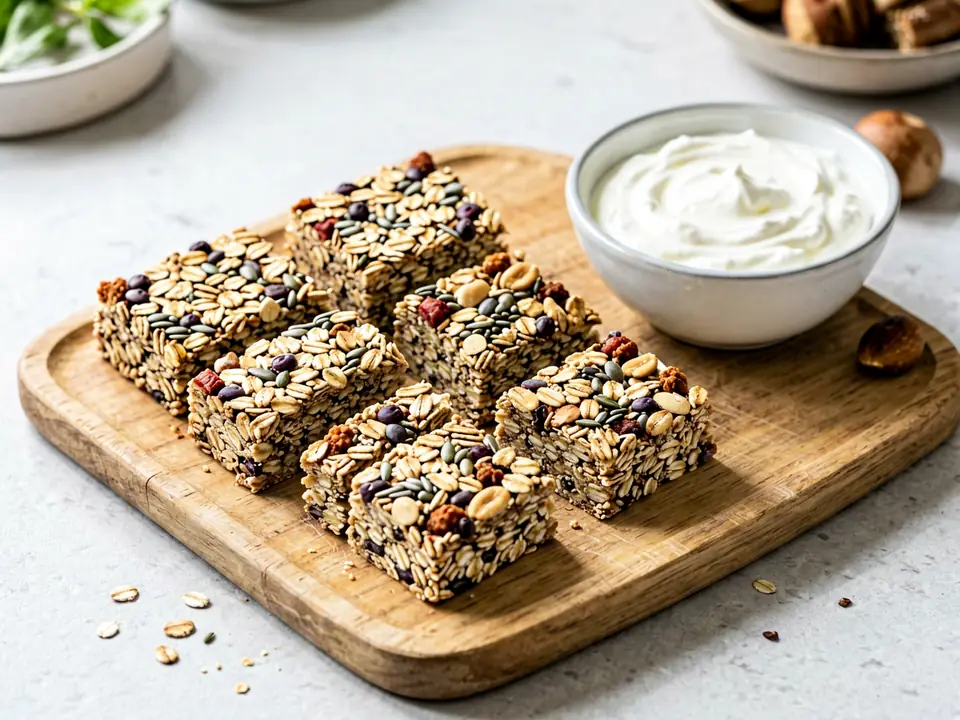
Ingredients, preparation, and texture
Flavor is part of adherence, not decoration. Use a small rotation of acids, herbs, spices, yogurt-based sauces, seeds, citrus, garlic, or measured oils. Check packaged sauces for added sugar, sodium, and serving size when those details matter to you. The goal is not to hide a food with an aggressive sauce; it is to make the main ingredients taste distinct enough that the routine does not become monotonous. Change one flavor variable at a time so you learn what improves the food instead of creating an unrepeatable mixture.
Substitutions work best when they protect the original ingredient's job. Useful alternatives here include sunflower-seed butter, a tested plant protein, mashed banana in a non-keto version, or extra yogurt when the mixture needs moisture. A replacement can change moisture, cooking time, sweetness, sodium, or texture, so make one change at a time when troubleshooting. Do not assume that a flour, sweetener, protein powder, dairy product, or packaged low-carb item behaves like another product with the same marketing description. Read the label, taste the component on its own, and adjust the portion or method instead of forcing an exact imitation.
Budget is part of the nutrition plan. Compare the cost of a finished serving, not just the package price, and use ingredients across two or three meals when they will still be enjoyable. Frozen vegetables, eggs, canned fish, yogurt, tofu, seeds, store-brand staples, and leftovers can often support the same structure as more specialized products. Spend money where it solves a real problem such as portability, tolerance, or time. Spend attention on seasoning and storage, because those are often more important to repeatability than premium packaging.
Food safety should be designed before cooking. Cool cooked foods promptly in shallow containers, keep perishable items chilled, use an insulated bag with an ice pack when needed, and follow current local guidance and product instructions. Do not use smell alone as a safety test. For this topic, refrigerate moist bars, freeze extras with parchment between pieces, and carry them in a chilled container when the ingredients require it. When a plan cannot keep a perishable ingredient cold, choose a shelf-stable alternative rather than extending the storage window. Convenience is never a reason to take a food-safety shortcut. For a neighboring use case, high-protein breakfast bars offers another way to add produce or texture without repeating the same plate.
A strong routine includes a minimum viable version. On a difficult day, use a protein yogurt bowl with seeds and fruit, portioned before eating, when a bar batch is not ready. This keeps the core behavior intact without pretending that every day has the same time, energy, appetite, or access to equipment. The fallback is not a lower moral standard; it is a continuity tool. Write it down, keep the ingredients visible, and make it easy enough that you can use it before hunger turns the decision into a rushed purchase or an undefined period of grazing.
Common mistakes are predictable. People may rely on the front of a package, prepare more food than they can safely store, confuse a low-carbohydrate label with a complete meal, or add fiber so quickly that comfort suffers. Another mistake is making every serving identical when a small flavor or texture change would make leftovers easier to eat. A better approach is to keep the central structure stable while varying the companion, sauce, temperature, or shape. That gives the routine enough novelty without rebuilding the kitchen every day.
- Choose ingredients you genuinely tolerate and enjoy.
- Keep the main portion visible before adding sauces, toppings, or crunchy extras.
- Use one fresh, cooked, or seed-based fiber source at a time when increasing gradually.
- Write the storage limit and intended serving count on the container or plan.
Decision table
| Role | Practical standard | Why it matters |
|---|---|---|
| Protein base | Protein powder, yogurt, eggs, or a tested combination | Sets the bar's main purpose and controls moisture |
| Fiber structure | Chia, flax, seeds, berries, or a suitable dry ingredient | Adds chew and bulk without relying on a large sweetener load |
| Portion boundary | Bars cut to a consistent size before storage | Makes a convenient snack visible and easier to track |
Portioning, storage, and a busy-day fallback
Use the table below as a decision aid rather than a ranking. Each row describes a role, the practical standard to check, and why the detail matters. The table is intentionally modest: it does not promise a particular health outcome. It helps answer the more useful question of what to do next, whether that is measuring a portion, draining a vegetable, packing a separate sauce, or adding a protein companion.
When reviewing the result, ask four questions. Was the portion clear? Did the food taste good enough to repeat? Did the texture survive the intended storage or reheating? Did the preparation fit the time and equipment actually available? If one answer is no, change one variable and test again. A recipe does not need to be optimized forever; it needs to teach you which small adjustment makes the next serving more useful.
For a week of meals, repeat the same design pattern rather than the same exact plate. Use one anchor, two vegetable or fruit options, one flavor system, and one backup. That lets high protein bar recipe low calorie support a routine without making it the only food you eat. Variety can come from temperature, seasoning, shape, or companion foods. The result is a plan that respects appetite and culture while still reducing daily decision-making. Use high-protein meal planning to turn this single idea into a broader planning rhythm.
Nutrition numbers, if used, should be treated as estimates unless they come from the exact label or a documented calculation. Ingredient brands, preparation, moisture loss, and serving size all change the result. Low-carb or keto language also describes a context, not a guarantee of nutritional completeness. If you need a medically precise target or have a condition affected by fiber, carbohydrate, fluid, or medication timing, ask a qualified professional to personalize the plan.
The practical conclusion is simple: make the role visible, keep the portion honest, add fiber in a way you can tolerate, and protect the texture and storage plan. high protein bar recipe low calorie is most useful when it makes one ordinary decision easier. Use the framework, adjust it to your household, and let the next week of actual use-not a dramatic promise-tell you what deserves to stay in rotation.
Frequently asked questions
Can high protein bar recipe low calorie fit every eating pattern?
Not automatically. The fit depends on the serving, the rest of the meal, personal tolerance, allergies, preferences, and the carbohydrate or fiber target a person is following. Start with the role-based method, check the current labels where relevant, and make a smaller or larger portion based on the real occasion rather than the headline. If the topic is medically relevant, use professional guidance.
How should I change the recipe or plan if the texture is wrong?
Change one variable at a time. Drain or add moisture gradually, separate wet and crisp components, adjust the cooking time, or introduce a contrasting companion. Record the change so the next attempt gives you useful information. Texture problems are often caused by storage or portion thickness rather than by the ingredient itself.
What is the easiest way to start?
Make the minimum viable version first: a protein yogurt bowl with seeds and fruit, portioned before eating, when a bar batch is not ready. Use a clear container or plate, add one companion, and decide the next serving before putting the ingredients away. Once that version is comfortable, expand the recipe or planning system with one new texture, flavor, or fiber source.
Continue with related guides
Snack ideas | keto crunchy snack | high-protein breakfast bars | high-protein meal planning | About Fiber First Kitchen | Editorial policy | Disclaimer
Editorial note: This article is general education, not individualized medical or dietetic advice. Nutrition estimates vary by product and serving. Follow current food-safety guidance and consult a qualified professional for personal medical or nutrition questions.
Reader Comments (8)
This article is fantastic! I could never figure out the difference between peptides and proteins, but now it's crystal clear. The absorption chart is especially helpful — I shared it with my mom and she finally gets why peptides are better absorbed than protein powder.
Thank you so much! Helping people truly understand this is the greatest reward for me. The difference you mentioned — molecular weight and absorption mechanism — is fundamental, and I'll be writing a more detailed comparison article soon 😊
As a gym guy, I always thought whey protein was the gold standard. After reading this, I realize hydrolyzed whey (whey peptides) actually has higher absorption efficiency. Doctor, should I go with whey peptides or regular whey protein powder post-workout?
The pro tip about vitamin C enhancing collagen peptide absorption is gold! I now pair my collagen peptide supplement with kiwi every morning and my skin really does seem to be improving gradually. More practical tips like this, please!