
Learn how almond flour can fit a keto-style diet, how to read its label, choose portions, bake with it, and pair it with satisfying foods.
Quick answer: Almond flour can fit a keto-style eating pattern because it is made from ground almonds and usually supplies fewer digestible carbohydrates per serving than wheat flour. It is not automatically low calorie, and its fiber content depends on the product and portion. The most useful approach is to treat almond flour as one ingredient in a meal or recipe, check the label, measure the amount, and pair baked foods with protein, vegetables, or another satisfying component.
What almond flour is and why people use it on keto
Almond flour is made by grinding blanched or whole almonds into a fine meal. Blanched almond flour is lighter and smoother, while almond meal may include the skins and have a coarser texture. Both can be useful, but they do not always behave the same way in a recipe. A fine flour tends to produce a softer crumb, while a coarse meal adds visible texture and can make a baked item feel more substantial.
People often use almond flour on keto because it replaces part or all of wheat flour in breads, muffins, pancakes, crackers, and cookies. Almonds provide fat, protein, and fiber, so a recipe built with almond flour may feel more filling than a similar recipe made only with refined flour. That does not make every almond-flour food a free food. Oils, butter, cheese, sweeteners, and large serving sizes can raise the total energy of the finished dish quickly.
The phrase “on keto” also needs context. Keto plans vary in their carbohydrate targets, and some people use a lower-carbohydrate pattern without aiming for ketosis. If you track carbohydrates, read the nutrition label for the exact brand and calculate the portion you actually eat. Product labels may list total carbohydrate and dietary fiber separately, while recipes may use different serving assumptions.
How to check the carbohydrate and fiber profile
Start with the label rather than relying on a generic internet number. Look for serving size, total carbohydrate, dietary fiber, added sugar, and the ingredient list. A two-tablespoon serving and a half-cup recipe serving are very different amounts. If you use a recipe, divide the total ingredients by the number of finished portions and keep the portion size consistent.
Some people estimate digestible carbohydrate by subtracting fiber from total carbohydrate. That calculation can be a useful planning tool, but it is still an estimate. Sugar alcohols, added fibers, product processing, and local labeling rules can affect the result. If you manage diabetes, take medication that affects blood glucose, or have been given a specific carbohydrate target, use the method recommended by your healthcare professional.
Fiber can support meal structure because it adds bulk and changes texture, but more is not always better in one sitting. A sudden large serving of almond flour may feel heavy for someone who is not used to fiber-rich foods. Increase portions gradually, drink fluids according to your personal needs, and pay attention to comfort. The site’s fiber planning section can help you organize changes across a day rather than adding everything to one recipe.
Best uses for almond flour in a keto-style kitchen
1. A measured baking base
Almond flour works well in quick breads, muffins, and small cakes when the recipe is designed for its higher fat content and lower gluten structure. It generally does not behave like a one-for-one replacement in a traditional wheat recipe. Too much can create a dense, oily result, while too little can leave the crumb fragile. Use a tested formula and let the baked item cool before slicing so the structure can set.
2. A coating for vegetables or protein
A light almond-flour coating can add crunch to zucchini, chicken, fish, or cheese-based bites. Season the coating before it touches the food, and use only enough to create a thin layer. A thick coating increases the portion without necessarily improving satisfaction. Bake or air-fry according to a safe method for the specific food, and avoid assuming that a browned surface means the center is fully cooked.
3. A binder in simple recipes
In meatballs, veggie patties, or small fritters, almond flour can help absorb moisture and hold the mixture together. Add it a little at a time because it thickens as it rests. If the mixture becomes dry, a small amount of egg, yogurt, or another suitable wet ingredient may help, depending on the recipe. The goal is a cohesive mixture, not a stiff one.
4. A topping with texture
Toasted almond meal can add a nutty finish to roasted vegetables, salads, or a bowl with protein and greens. Toast it carefully because the fine particles can go from pale to burnt quickly. A tablespoon may be enough to change the texture of a serving. Using a small measured topping lets you enjoy the ingredient without making every meal a large baking project.
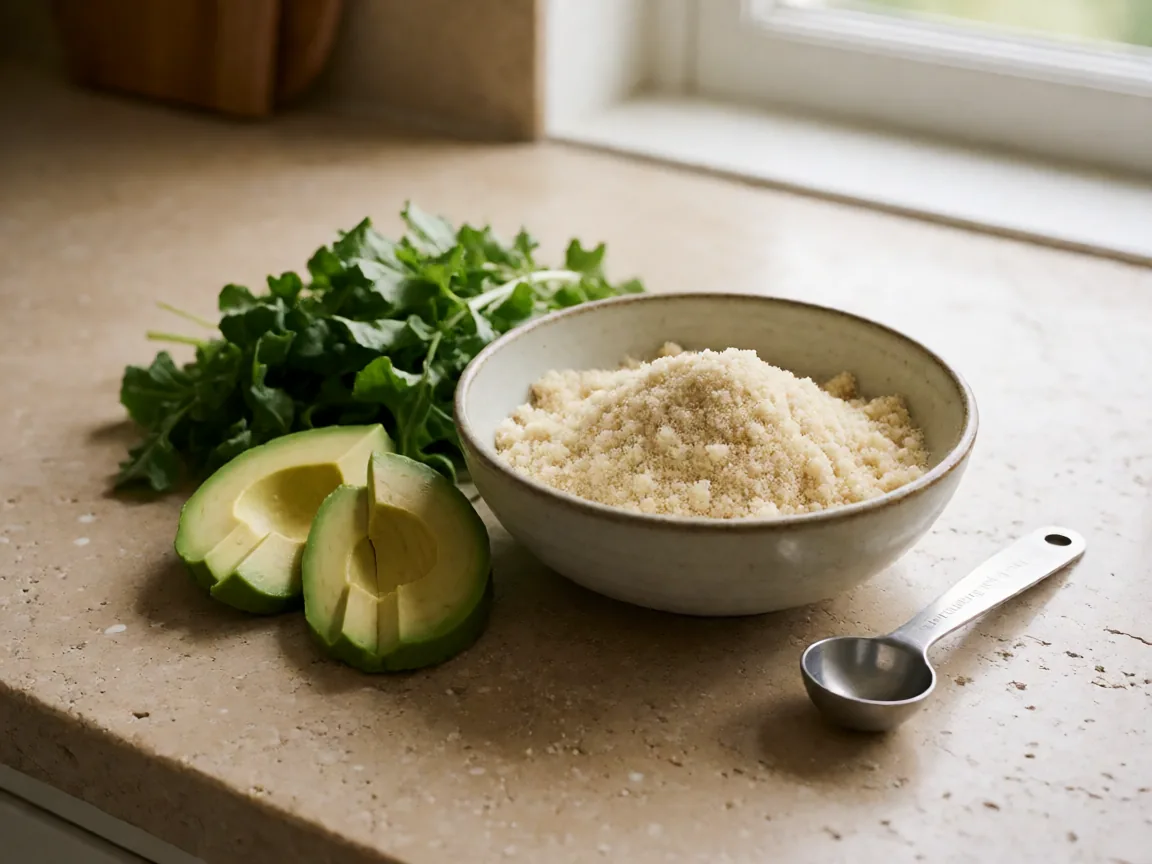
A practical almond-flour meal formula
Instead of asking whether almond flour is “good” or “bad,” build the meal around roles. Choose one portion of a recipe that uses almond flour, add a protein source if the recipe is mostly flour and fat, and include a vegetable or fruit that fits your eating pattern. For example, a small almond-flour muffin can be served with plain yogurt and berries, while a few almond-flour crackers can accompany tuna, eggs, or a vegetable dip. This structure makes the food more satisfying than eating several baked items alone.
For a savory plate, try a small almond-flour coating on a protein, a large serving of non-starchy vegetables, and a sauce measured separately. For a sweet breakfast, combine one baked portion with an unsweetened dairy or soy option and a portion of fruit if it fits your carbohydrate target. These are frameworks, not prescriptions. Appetite, allergies, budget, schedule, and medical needs all matter.
When you want more recipe ideas, visit the almond meal recipes keto guide for ways to compare texture and preparation. If bread is your goal, the almond meal keto bread guide explains why cooling, moisture, and slicing affect the final loaf.
Common mistakes to avoid
Assuming all almond products are interchangeable
Almond flour, almond meal, almond butter, and almond powder have different textures and concentrations. Almond butter contains ground almonds but also contributes a different amount of moisture and fat. Powdered products may include added ingredients. Substitute only when the recipe gives you enough flexibility to adjust liquid and structure.
Ignoring the serving size
A recipe may look low in carbohydrate per portion because it makes many small portions. If you eat two or three portions, recalculate the total. Measure the finished item when possible, and keep a note of how many servings you actually made. This is especially useful for dense foods that are easy to nibble while cooking.
Using almond flour to remove all vegetables
Replacing wheat flour does not automatically create a balanced meal. Almond flour can add fiber, but it should not be the only source of plant foods. Vegetables, herbs, seeds, legumes when they fit your plan, and fruit in an appropriate portion can contribute different fibers and textures. Variety is more practical than making one ingredient carry every nutrition goal.
Overlooking allergies and digestion
Tree-nut allergies are a clear reason to avoid almond flour and choose a safe alternative. Some people also notice discomfort when they increase rich, fiber-containing foods quickly. Keep a simple record of ingredients and portions if you are trying to identify a pattern, and seek qualified medical advice for persistent or concerning symptoms.
Storage and preparation tips
Store almond flour according to the package directions. Because almonds contain natural oils, a cool, dry cupboard may be fine for short-term use, while refrigeration or freezing can help preserve quality for longer storage. Keep the flour sealed and use a clean, dry spoon. If it smells rancid, tastes bitter, or shows signs of moisture or mold, discard it.
For baked recipes, let the item cool fully before storing so trapped steam does not make the surface soggy. Freeze portions individually when you want a convenient option, and label the date. Reheat only the amount you plan to eat. For coatings and toppings, toast small batches and keep them separate from wet foods until serving.
Frequently asked questions
Is almond flour lower in carbs than regular flour?
It is often lower in digestible carbohydrate per comparable weight, but the exact difference depends on the product and portion. Check the label and the complete recipe rather than assuming a fixed number.
Can I replace wheat flour with almond flour one for one?
Usually not. Almond flour has no gluten and contains more fat, so a traditional recipe may need different amounts of eggs, liquid, leavening, or flour. Use a recipe created for almond flour when possible.
Does almond flour count as a high-fiber food?
It contributes dietary fiber, but the amount per serving is modest unless the serving is large. Use it as one part of a varied fiber pattern that includes vegetables, seeds, nuts, fruit, or other foods that fit your needs.
Is almond flour suitable for everyone following keto?
No single ingredient suits everyone. Allergies, digestive tolerance, personal carbohydrate targets, cultural preferences, and medical conditions can change the answer. Treat this guide as general food education and ask a qualified professional for individualized advice.
Bottom line
Almond flour can be a useful keto-friendly baking and cooking ingredient when you measure it, check the label, and use it within a complete meal. Its value comes from flexibility, nutty flavor, and a combination of fat, protein, and fiber—not from a promise that every almond-flour recipe is automatically healthy or weight-loss friendly. Start with a tested portion, pair it with foods that improve satisfaction, and adjust gradually based on your routine and comfort.
Reader Comments (8)
This article is fantastic! I could never figure out the difference between peptides and proteins, but now it's crystal clear. The absorption chart is especially helpful — I shared it with my mom and she finally gets why peptides are better absorbed than protein powder.
Thank you so much! Helping people truly understand this is the greatest reward for me. The difference you mentioned — molecular weight and absorption mechanism — is fundamental, and I'll be writing a more detailed comparison article soon 😊
As a gym guy, I always thought whey protein was the gold standard. After reading this, I realize hydrolyzed whey (whey peptides) actually has higher absorption efficiency. Doctor, should I go with whey peptides or regular whey protein powder post-workout?
The pro tip about vitamin C enhancing collagen peptide absorption is gold! I now pair my collagen peptide supplement with kiwi every morning and my skin really does seem to be improving gradually. More practical tips like this, please!