
Build a practical low-carb breakfast bar with nuts, seeds, a reliable binder, equal portions, safe storage, and flexible protein pairings.
Quick answer: A low-carb breakfast bar works best when it combines a reliable binder with nuts or seeds, a modest amount of carbohydrate-containing ingredients, and enough protein or a protein-rich side to make breakfast satisfying. Press the mixture firmly, bake or chill it according to the formula, cool it fully, and cut equal bars. “Low carb” depends on the ingredients and serving size, so check the complete recipe rather than judging the name.
What makes a low-carb breakfast bar useful
A breakfast bar is most useful when it solves a practical problem: you need a portable food that can be prepared ahead, stored safely, and eaten without much equipment. It should have enough structure to travel, a texture you enjoy, and a portion that fits your appetite. A bar made mostly from nuts and fat may be low in carbohydrate but not satisfying for everyone. Another bar may contain dates, oats, honey, or a large amount of dried fruit and therefore not fit a lower-carbohydrate plan.
Start with the role of the bar in your day. It may be a complete small breakfast for one person, a snack between meals for another, or one part of a larger breakfast. If you eat it as the only morning food, consider adding protein and a source of produce when practical. If you use it as a snack, a smaller bar may be enough. This decision affects the recipe size, the cut, and the way you evaluate the finished product.
Because low-carb labels are not standardized in the same way everywhere, read the nutrition information for each ingredient. Count the entire batch, then divide by the number of bars actually cut. If you change the nuts, sweetener, chocolate, yogurt, or fruit, recalculate. A small ingredient can affect the result when it is repeated across every portion.
Building blocks of a reliable bar
Seeds and nuts for structure
Almonds, walnuts, pumpkin seeds, sunflower seeds, chia seeds, and ground flax can provide crunch, richness, and some fiber. Choose a mixture that matches your texture preference. Whole nuts make a chunky bar, while ground nuts help the mixture bind. Toasting can improve flavor, but watch closely because small seeds burn quickly.
A binder that sets
Nut butter, egg, mashed seed gel, unsweetened yogurt, or a small amount of melted fat can bind the ingredients, but each creates a different result. A baked egg-based bar will set differently from a refrigerator bar held together by nut butter. Do not add a large amount of liquid at once. The mixture should press into a cohesive layer without becoming wet or oily.
Flavor without a heavy sugar load
Cinnamon, vanilla, citrus zest, unsweetened cocoa, salt, or toasted coconut can make a bar taste complete without relying on a thick sugary coating. If you use a low- or no-sugar sweetener, choose one that you tolerate and that is intended for the preparation method. Chocolate chips and dried fruit can be used as accents if they fit your carbohydrate target, but they should be measured.
Optional protein support
A breakfast bar may include eggs, a plain protein ingredient, or a protein-rich nut and seed combination. Check the label of any powder or packaged ingredient for added sugar and serving size. You can also serve the bar with plain Greek-style yogurt, cottage cheese, tofu, or eggs when those foods suit your preferences. A side dish often gives you more flexibility than trying to force every nutrition goal into one small bar.
A simple preparation method
Line a square pan with parchment and leave enough paper over the sides to lift the slab out later. Measure the dry ingredients first. If you are using whole nuts, chop them to a similar size so the bars cut evenly. Mix the seeds, nuts, spices, and any dry binder in a large bowl.
Warm the wet binder only enough to make it stirrable. Very hot fat can separate from the mixture and can create a texture that will not hold. Pour the wet ingredients over the dry ingredients and fold until every piece is lightly coated. Press a small amount in your hand. If it falls apart, add the recipe’s binder in small additions; if it looks glossy and loose, add a little dry ingredient or chill it before pressing.
Transfer the mixture to the pan and press firmly into an even layer. Use the flat base of a glass or a second piece of parchment to compress the surface. Pay special attention to the corners because loose edges tend to crumble first. Keep the slab a consistent thickness so that the center and edges set at a similar rate.
Bake according to the formula if the mixture contains egg or needs to toast and set. For a refrigerator bar, chill until firm before cutting. Let the slab cool completely, then lift it out and use a sharp knife to cut equal portions. Wipe the knife between cuts if the binder sticks. Equal portions make storage and carbohydrate estimates easier.
How to serve a breakfast bar
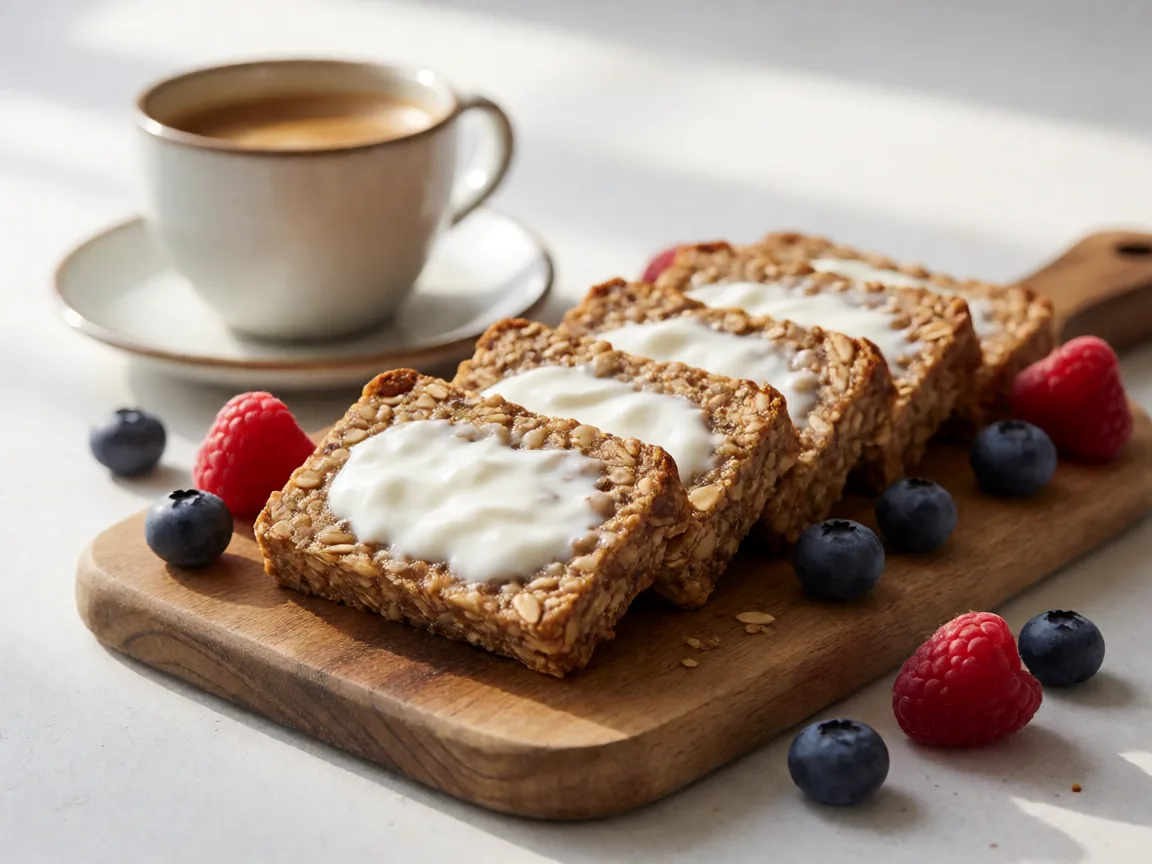
For a quick breakfast, place one bar next to a protein source and a drink. Plain yogurt, eggs, cottage cheese, tofu, or a milk alternative with a suitable nutrition profile can add staying power. Add berries or another fruit portion if it fits your plan. The bar supplies convenience and texture; the side dish helps you adjust the meal without changing the whole batch.
For a work or travel snack, pack one bar with a portion of cheese, roasted edamame, or another suitable food if refrigeration and allergies allow. Keep the bar away from heat because nut butter and fat soften quickly. If your day is unpredictable, pack two small bars rather than one oversized bar so you can decide later whether you need the second portion.
For a lower-preparation breakfast, use the high-fiber breakfast section to compare bars with other make-ahead formats. A baked option such as the low-carb breakfast bake may be easier when you prefer a fork-and-plate meal. If you want a different portable formula, see the low-carb high-protein breakfast bars guide.
Keeping the bar lower in carbohydrate
Use nuts and seeds as the main dry ingredients, and be cautious with ingredients that concentrate sugar. Dates, raisins, honey, maple syrup, sweetened cereal, and large amounts of banana can push a bar away from a low-carb profile. If you use a small amount for flavor, distribute it across the batch and calculate the finished portions.
Choose plain versions of yogurt, nut butter, coconut, and chocolate when possible, then check the label for added sugars. A product can look like a health food and still contribute more carbohydrate than expected. The complete recipe matters more than any one ingredient’s reputation.
Fiber can help a bar feel more substantial, but do not add several concentrated fiber ingredients simply to change a nutrition number. Some people experience bloating or discomfort when they increase fiber quickly. Use a gradual approach, drink fluids according to personal needs, and choose a variety of foods instead of turning one bar into a dense supplement.
Troubleshooting texture
Bars crumble when cut
The mixture may not have enough binder, the layer may not have been pressed firmly, or the slab may not have cooled enough. Chill longer before cutting and use a smaller portion of the batch for one test bar. If it remains fragile, adjust the binder next time rather than simply adding more nuts.
Bars are too soft
Too much wet binder, an underbaked center, or warm storage can make the bars bend or smear. Refrigerate the slab before cutting and let it cool fully after baking. If the texture is still too soft, reduce liquid or increase a dry ingredient in the next batch.
Bars taste dry
Dryness can result from too many seeds, overbaking, or not enough binder. Smaller portions may also seem dry because more surface is exposed. Use a topping or side dish for the current batch, then adjust the formula carefully rather than adding a large amount of oil.
Bars taste bland
Nut-based recipes often need salt, spice, acid, or aromatic ingredients to taste balanced. Add vanilla, cinnamon, citrus zest, cocoa, or a small amount of unsweetened coconut. Taste the mixture only when all ingredients are safe to eat raw; mixtures containing raw egg should not be tasted before baking.
Storage, packing, and food safety
Cool baked bars completely before sealing them. Store them in a covered container, separating layers with parchment. Follow the recipe’s instructions for refrigeration because bars containing egg, dairy, or moist fruit may require cold storage. Refrigerator bars should remain chilled until packed, especially in warm weather.
Freeze individual portions when you want a longer storage option. Label the date and thaw in the refrigerator or according to the recipe instructions. For work or travel, use an insulated bag and cold pack when the ingredients require it. Discard bars that develop mold, an off smell, or a wet texture that is inconsistent with the original recipe.
Frequently asked questions
Can a low-carb breakfast bar be a complete breakfast?
It can be part of a small breakfast, but whether it is enough depends on its protein, fiber, energy, portion, and your appetite. Pairing it with a protein source gives you more control than relying on the bar alone.
Are oats allowed in a low-carb breakfast bar?
Oats may not fit every low-carb plan, and the amount changes the recipe’s carbohydrate profile. If you use them, measure them and calculate the complete batch. You can also choose seeds and nuts for a different texture.
How many bars should a recipe make?
Choose a number that matches the role of the food. Smaller bars can work as snacks, while larger bars may be useful for breakfast. Cut equal portions and recalculate if the final number changes.
Can I use a protein powder?
You can if the recipe is designed for it and you check the product label. Protein powders absorb liquid differently, and some include sweeteners or fibers that affect texture and digestion.
Bottom line
A low-carb breakfast bar is a preparation strategy, not a nutrition guarantee. Build it from measured ingredients, use a binder that sets, press the mixture firmly, and pair the finished bar with foods that improve satisfaction when needed. By keeping portions consistent and storage safe, you can make a portable breakfast that supports a realistic routine without relying on exaggerated health claims.
Reader Comments (8)
This article is fantastic! I could never figure out the difference between peptides and proteins, but now it's crystal clear. The absorption chart is especially helpful — I shared it with my mom and she finally gets why peptides are better absorbed than protein powder.
Thank you so much! Helping people truly understand this is the greatest reward for me. The difference you mentioned — molecular weight and absorption mechanism — is fundamental, and I'll be writing a more detailed comparison article soon 😊
As a gym guy, I always thought whey protein was the gold standard. After reading this, I realize hydrolyzed whey (whey peptides) actually has higher absorption efficiency. Doctor, should I go with whey peptides or regular whey protein powder post-workout?
The pro tip about vitamin C enhancing collagen peptide absorption is gold! I now pair my collagen peptide supplement with kiwi every morning and my skin really does seem to be improving gradually. More practical tips like this, please!